

Introduction
In today’s digital-first world, your customers are searching online before making a purchase. Whether they’re looking for a product, service, or solution, the first page of Google often decides which businesses get noticed.
This raises an important question for business owners:
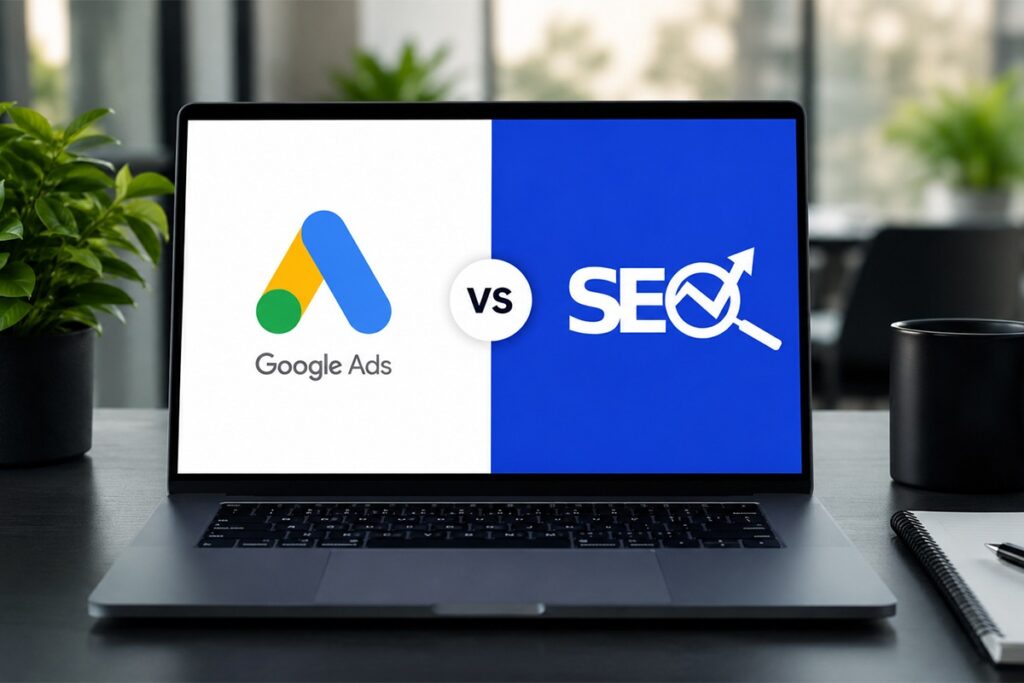
Should you invest in Search Engine Optimization (SEO) or Google Ads?
Both strategies can increase website traffic, generate quality leads, and boost sales—but they serve different purposes. SEO focuses on building long-term visibility and trust, while Google Ads delivers immediate exposure and faster results.
The right choice depends on your business objectives, timeline, budget, and competition.
In this blog, we’ll compare SEO and Google Ads in detail, explain their advantages, and help you determine which strategy—or combination of both—will deliver the best return on investment.
What is SEO?
Search Engine Optimization (SEO) is the process of improving your website so it ranks higher in Google’s organic (non-paid) search results.
Instead of paying for every visitor, SEO attracts people who are actively searching for your products or services by improving your website’s relevance, authority, and user experience.
A strong SEO strategy includes:
- Keyword Research
- On-Page SEO
- Technical SEO
- High-Quality Content Creation
- Local SEO
- Link Building
- Website Speed Optimization
- Mobile-Friendly Design
Benefits of SEO
- Sustainable organic traffic
- Improved brand credibility
- Better user experience
- Higher long-term ROI
- Increased visibility on Google
- Lower cost per lead over time
Suggested Image: “How SEO Works – Keyword Research → Website Optimization → Google Ranking → Organic Traffic → Leads”
What is Google Ads?
Google Ads is Google’s Pay-Per-Click (PPC) advertising platform that allows businesses to appear at the top of search results almost instantly.
Unlike SEO, advertisers pay only when someone clicks on their advertisement.
Google Ads is ideal for businesses that need immediate visibility, product launches, seasonal campaigns, or rapid lead generation.
Popular Google Ads Campaign Types
- Search Ads
- Display Ads
- Shopping Ads
- Performance Max Campaigns
- YouTube Ads
- Remarketing Campaigns
Benefits of Google Ads
- Instant visibility
- Highly targeted audience
- Flexible budgets
- Measurable performance
- Fast lead generation
- Easy campaign optimization
Suggested Image: Google Ads campaign flow showing Keyword → Ad → Landing Page → Lead Conversion.
SEO vs Google Ads: Side-by-Side Comparison
| Feature | SEO | Google Ads |
| Results | 3–6 Months | Immediate |
| Traffic | Organic | Paid |
| Cost | Investment in optimization | Pay per click |
| Long-Term ROI | Excellent | Budget-dependent |
| Brand Trust | High | Moderate |
| Sustainability | Long-term | Stops when ads stop |
| Best For | Business Growth | Instant Leads |
| Click Cost | No cost per click | Pay for every click |
| Credibility | Higher | Advertisement Label |
SEO vs Google Ads: Which One is More Cost-Effective?
Many business owners assume SEO is expensive because results take time. However, when viewed over the long term, SEO often provides a lower cost per acquisition than paid advertising.
Google Ads, while highly effective for generating quick leads, requires continuous investment. Once your advertising budget is paused, traffic stops almost immediately.
If your goal is sustainable growth, SEO delivers stronger long-term value. If your priority is immediate enquiries, Google Ads is the faster option.
When Should You Invest in SEO?
SEO is ideal when your business wants to:
- Build long-term online visibility
- Increase organic website traffic
- Improve search engine rankings
- Establish industry authority
- Reduce customer acquisition costs over time
- Generate consistent leads without relying solely on paid advertising
Industries that benefit greatly from SEO include manufacturing, healthcare, education, real estate, professional services, and e-commerce.
When Should You Invest in Google Ads?
Google Ads is a great choice if you:
- Need leads immediately
- Are launching a new product or service
- Have seasonal promotions
- Want to test new markets
- Need quick visibility for competitive keywords
- Are running event-based campaigns
Why Successful Businesses Use Both SEO and Google Ads
Rather than choosing one strategy over the other, many successful businesses combine SEO and Google Ads to maximize results.
SEO builds:
- Brand authority
- Organic visibility
- Customer trust
- Long-term traffic
Google Ads delivers:
- Immediate website visitors
- Qualified leads
- Quick campaign testing
- Faster sales opportunities
Together, they create a balanced digital marketing strategy that supports both short-term growth and long-term success.
Real-World Example
Imagine you’re launching a new manufacturing business.
Month 1–3
- Run Google Ads to generate enquiries immediately.
- Build optimized landing pages.
- Publish SEO-focused blog content.
Month 4–6
- Begin ranking for industry keywords.
- Increase organic traffic.
- Reduce dependence on paid advertising.
Month 6+
- Continue SEO to maintain rankings.
- Use Google Ads for product launches, offers, and remarketing.
This combination provides immediate results while building a sustainable online presence.
Common Mistakes Businesses Make
Avoid these common digital marketing mistakes:
- Expecting SEO results within a few weeks
- Running Google Ads without conversion tracking
- Ignoring landing page optimization
- Targeting the wrong keywords
- Neglecting mobile responsiveness
- Publishing thin or duplicate content
- Failing to measure ROI regularly
Frequently Asked Questions
Is SEO better than Google Ads?
SEO is better for long-term visibility and sustainable traffic, while Google Ads is ideal for immediate results. The right choice depends on your business goals.
How long does SEO take to show results?
SEO typically begins delivering measurable improvements within 3 to 6 months, depending on your industry, competition, and website quality.
Is Google Ads worth it for small businesses?
Yes. When campaigns are properly planned and optimized, Google Ads can generate quality leads even with a modest budget.
Can I use SEO and Google Ads together?
Absolutely. Combining both strategies helps businesses achieve immediate visibility while building long-term authority and reducing future advertising costs.
Which strategy offers a better return on investment?
SEO generally provides stronger long-term ROI, whereas Google Ads offers faster short-term returns. Many businesses achieve the best results by integrating both into a unified marketing strategy.
Final Thoughts
There is no universal winner in the SEO vs Google Ads debate.
The most effective strategy depends on where your business is today—and where you want it to be tomorrow.
If you need immediate enquiries, Google Ads is an excellent choice. If you’re focused on building a strong digital presence that generates consistent traffic and leads over time, SEO is the smarter long-term investment.
Businesses that combine both strategies benefit from immediate visibility today and sustainable growth for years to come.